


 Download HD


Disclosure: This post may contain affiliate links, meaning we get a commission if you decide to make a purchase through our links, at no cost to you.
The Right to Ruffle Feathers: George Orwell on True Liberty
Alright, listen up, folks. If there's one thing we need to get straight, it's that liberty isn't all sunshine and rainbows. George Orwell, the man who gave us "1984" and a permanent case of Big Brother paranoia, nailed it with this gem: "If liberty means anything at all, it means the right to tell people what they do not want to hear."
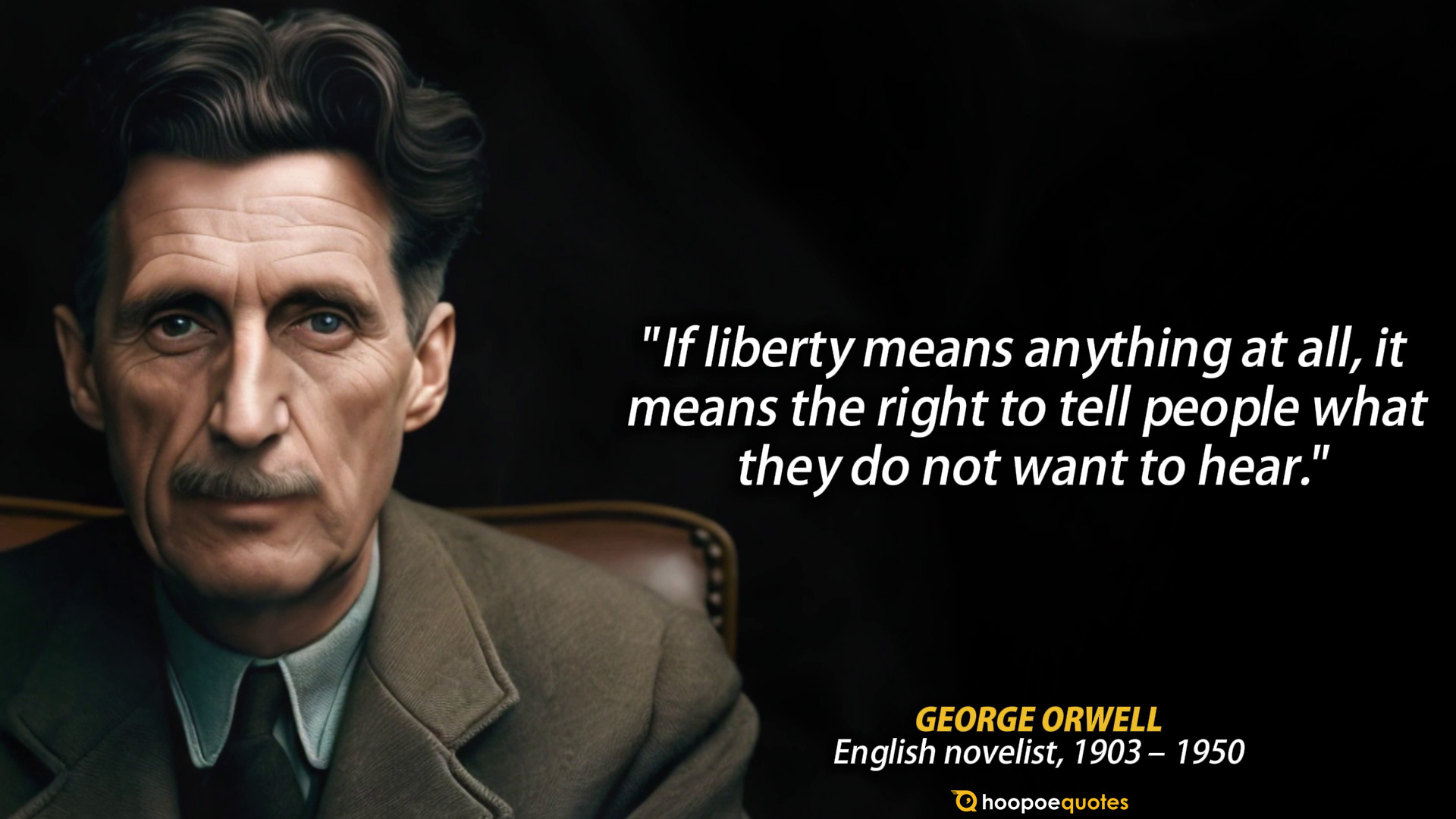
Orwell wasn't just some dude with a knack for bleak futures. He was a writer who saw through the BS and called it out. This quote? It's as relevant today as it was back when he penned it. Let's dive into why telling people the uncomfortable truth is the backbone of real freedom.
Unpacking Orwell's Mic Drop
Orwell wasn't just waxing poetic; he was laying down a hard truth. Liberty, in its purest form, means having the cojones to say what needs to be said, even if it's going to ruffle some feathers. It’s about truth over comfort, and honesty over popularity. It implies that freedom isn’t about saying whatever you want; it’s about the necessity of saying what must be heard.
Orwell knew a thing or two about oppressive regimes and the silencing of dissent. His whole career was about exposing the rot beneath the surface, whether in politics or society. So, when Orwell talks about liberty, he’s talking from the trenches of real-world experience.
Historical Context and Orwell's Reality Check
Orwell wasn’t pulling this idea out of thin air. Born Eric Arthur Blair, he witnessed the rise of totalitarianism firsthand. The 20th century was a hot mess of oppressive regimes and the systematic crushing of dissent. Orwell, with his journalist’s eye and a heart that beat for justice, saw the dangers of a world where people only hear what they want to hear.
From the Spanish Civil War to World War II, Orwell’s experiences shaped his understanding of freedom. His time fighting in Spain and observing the horrors of totalitarianism led him to a simple conclusion: a society that censors itself is doomed.
The Philosophical Lowdown: Why Freedom Needs Dissent
Orwell's quote aligns with some heavy-hitting philosophical principles. Think about John Stuart Mill and his "Marketplace of Ideas" concept. Mill argued that for society to progress, every idea—no matter how unpopular—needs a fair shot. Only through this clash of ideas can the truth emerge.
Similarly, existentialist thinkers like Sartre would back Orwell up. Sartre believed in the freedom to create meaning in a chaotic world, which involves confronting uncomfortable truths head-on. Freedom isn’t about avoiding discomfort; it’s about embracing it as part of the human experience.
Psychological and Societal Perspectives
From a psychological standpoint, hearing what we don't want to hear is crucial for growth. Cognitive dissonance, that uncomfortable feeling when faced with conflicting information, pushes us to reassess and evolve. It’s the grit in the oyster that makes the pearl.
On a societal level, the right to dissent keeps power in check. Without it, we’re just echo chambers marching to the beat of propaganda. Orwell’s quote is a call to arms for every whistleblower, protester, and truth-teller out there. It’s a reminder that liberty is noisy, messy, and absolutely necessary.
Contemporary Relevance: Speaking Truth to Power Today
Fast forward to today, and Orwell’s words are more relevant than ever. In an era of fake news, echo chambers, and cancel culture, the right to tell people what they don’t want to hear is under siege. Whether it’s calling out systemic racism, challenging climate change denial, or just speaking uncomfortable truths, liberty demands we keep talking.
Look at movements like #MeToo or Black Lives Matter. These aren’t comfortable conversations, but they’re vital. They push society to confront its ugliest parts and, hopefully, come out better on the other side.
Personal Reflection: Embrace the Uncomfortable
Here’s the kicker: Orwell’s wisdom isn’t just for the history books or philosophy classes. It’s a call to action for each of us. We need to embrace the uncomfortable conversations in our own lives. Whether it's calling out a friend’s problematic behavior or standing up against workplace injustices, real liberty means speaking up.
And yes, it’s scary. It’s awkward. But it’s also necessary. The next time you bite your tongue because the truth is too uncomfortable, remember Orwell. Liberty isn’t about making people happy; it’s about making people think.
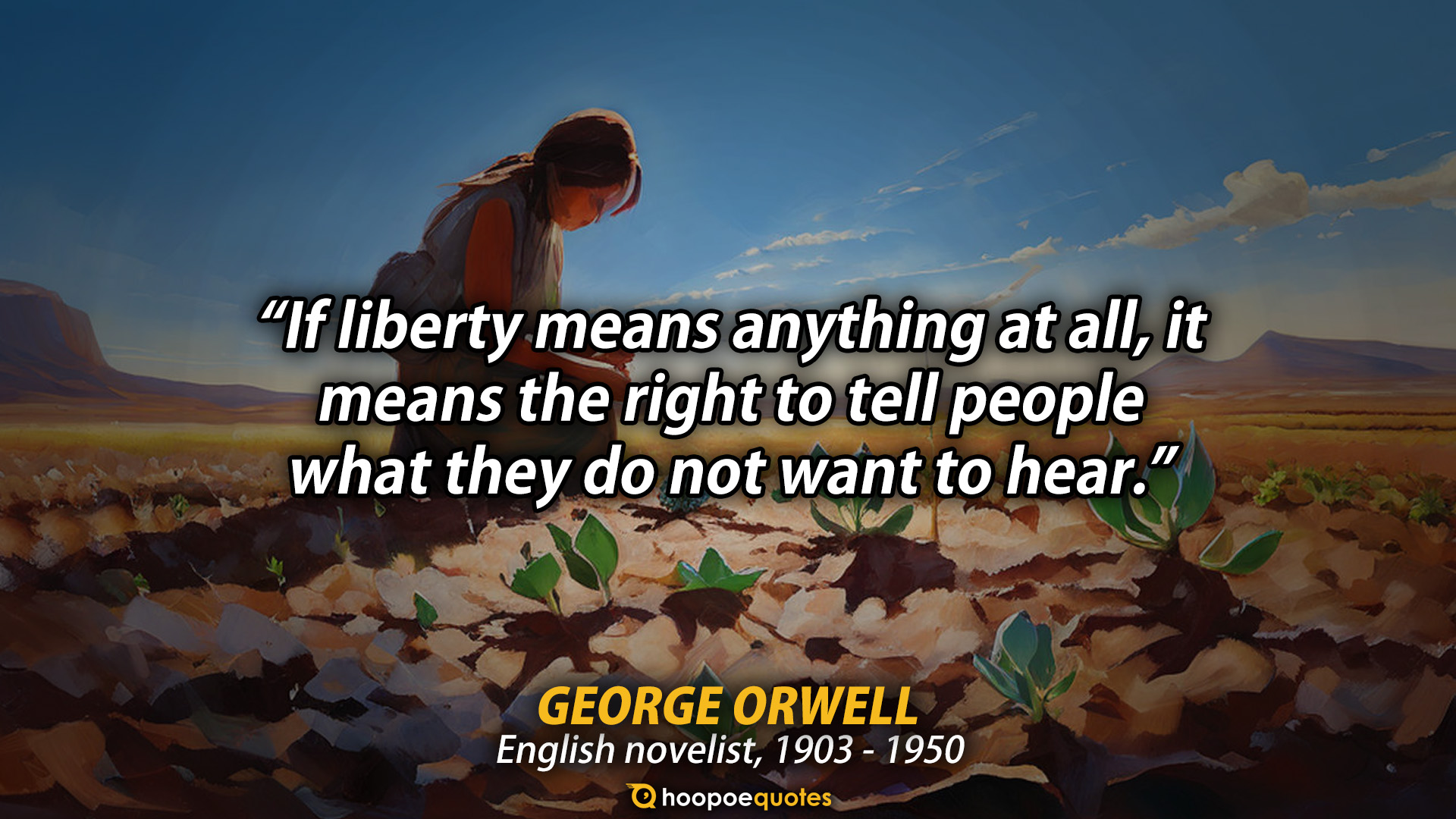
To wrap this up, let’s take Orwell’s words to heart. Liberty, real liberty, is about the right to tell people what they don’t want to hear. It’s about challenging the status quo, questioning authority, and pushing the boundaries of what’s acceptable. It’s messy, it’s loud, and it’s damn well worth it.
So go ahead, ruffle some feathers. Speak your truth. After all, if liberty means anything at all, it means that.
References and Further Reading
- George Orwell, "1984"
- John Stuart Mill, "On Liberty"
- Jean-Paul Sartre, "Existentialism is a Humanism"
- Naomi Klein, "The Shock Doctrine"
- Ta-Nehisi Coates, "Between the World and Me"
Explore these works to dive deeper into the themes Orwell touches on. And remember, sometimes the most uncomfortable truths are the ones we need to hear the most.


