

 Download HD


Disclosure: This post may contain affiliate links, meaning we get a commission if you decide to make a purchase through our links, at no cost to you.
In a Time of Deceit: George Orwell and the Revolutionary Power of Truth
Ever notice how truth can feel like a slap in the face in a world full of lies? George Orwell sure did. This guy, with his knack for seeing through the BS, gave us a gem: "In a time of deceit, telling the truth is a revolutionary act." Orwell, the man behind classics like 1984 and Animal Farm, was a master at ripping the mask off society’s pretense. His words still hit hard today, especially in an era where misinformation spreads like wildfire. In this article, we’re diving deep into Orwell’s quote, its meaning, and why it’s as relevant as ever.
Truth in the Era of Lies
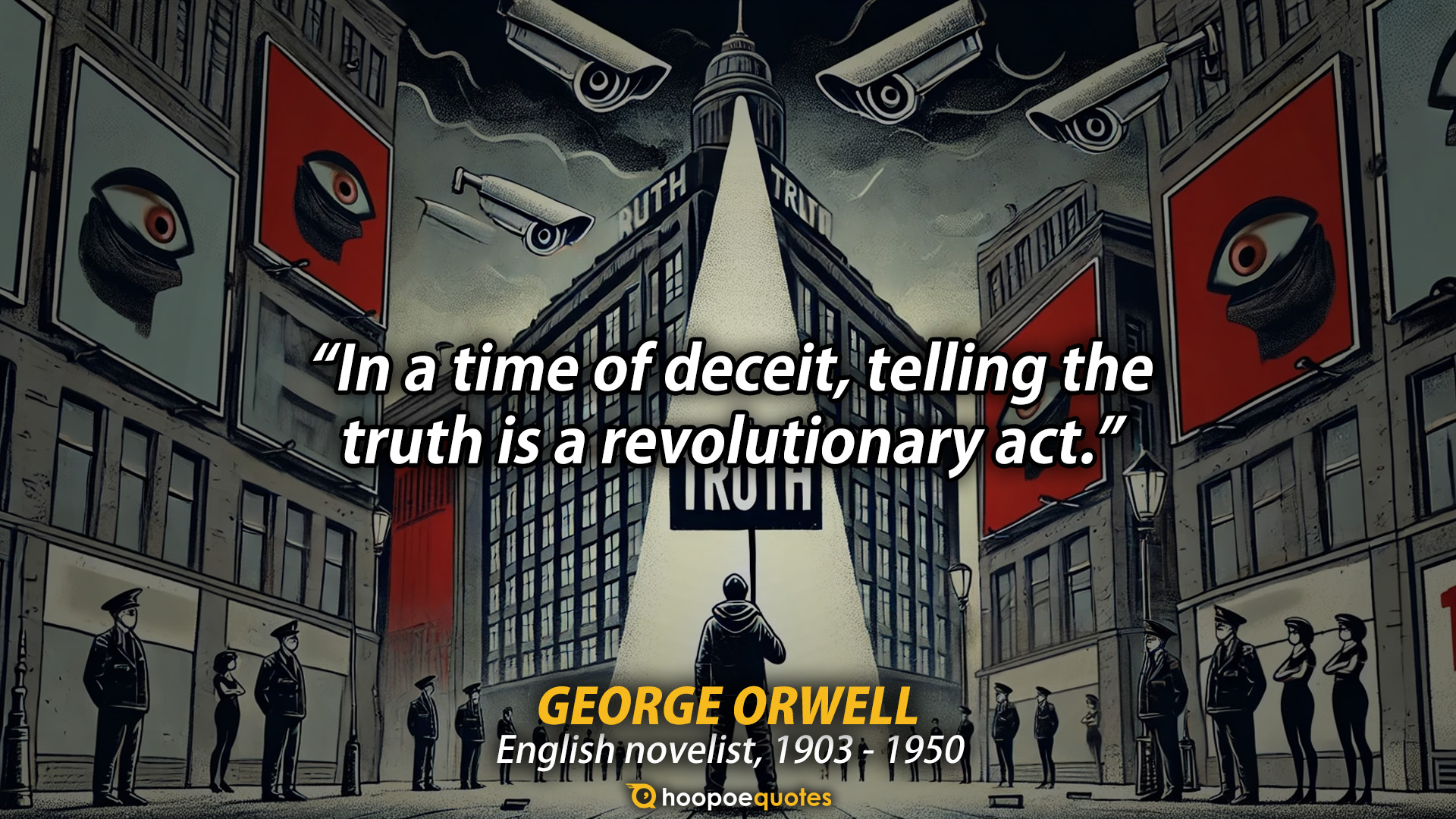
Orwell's quote is like a wake-up call for our sleeping conscience. It’s a reminder that in times when deceit runs rampant, simply being honest is an act of rebellion. This isn't just about lying politicians or shady businesses; it’s about the everyday crap we buy into. The quote challenges us to cut through the fog of dishonesty and be beacons of truth.
Orwell’s Life and Legacy
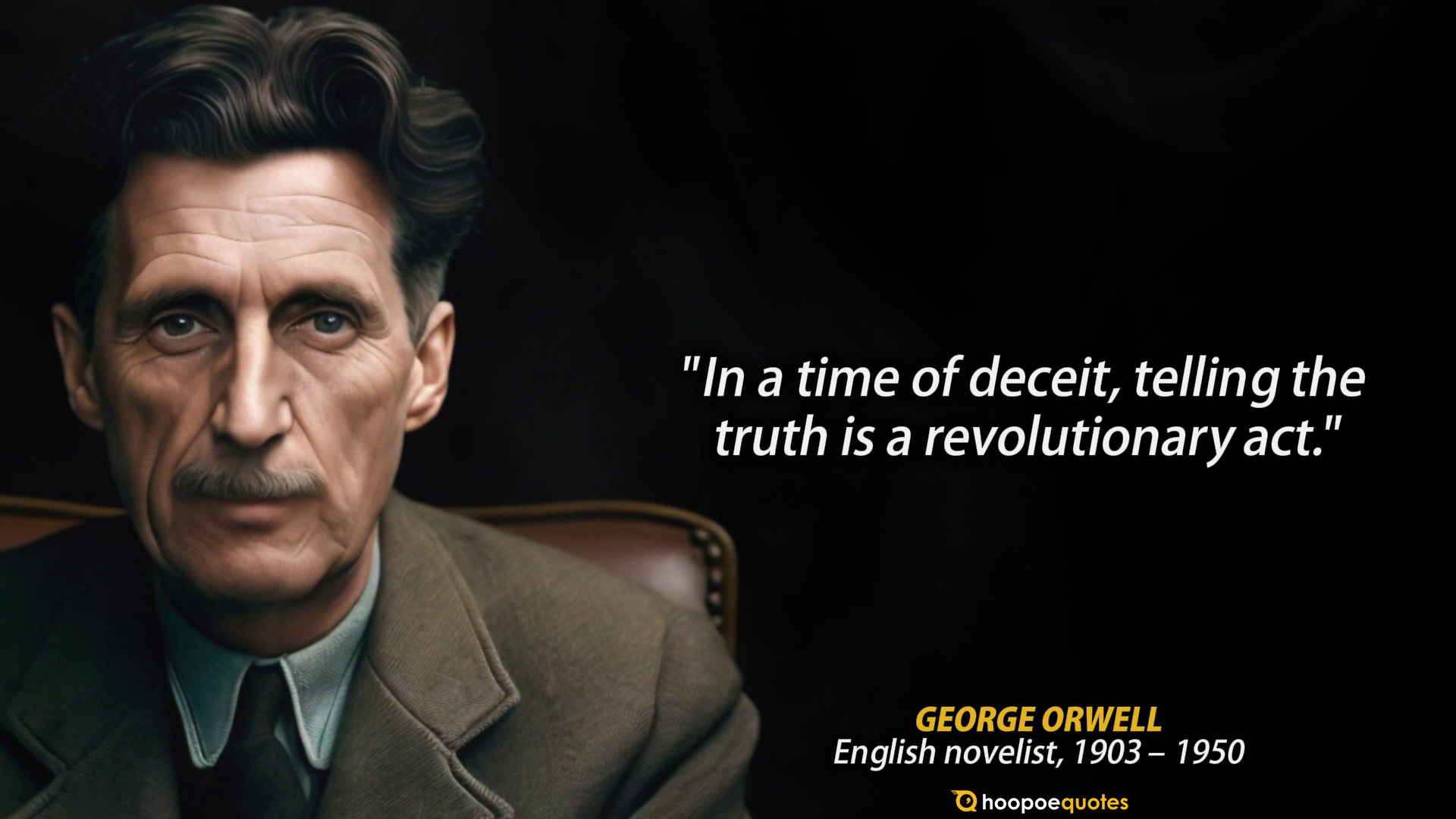
George Orwell, born Eric Arthur Blair, was a man who saw the world’s dark side and didn’t shy away from exposing it. His works are a testament to his relentless pursuit of truth and justice. From witnessing the brutality of war to critiquing totalitarian regimes, Orwell’s life was a series of battles against deceit. His words resonate because he lived them, and he saw firsthand what happens when lies become the norm.
Historical Perspective
Orwell wrote in a time of great political upheaval. The mid-20th century was riddled with propaganda, censorship, and manipulation. Whether it was the rise of fascism, communism, or the propaganda machines of World War II, Orwell’s era was a breeding ground for deceit. His experiences in the Spanish Civil War and his observations of Stalinist Russia shaped his cynical yet insightful views on truth and power.
Philosophical Underpinnings
Philosophically, Orwell’s quote taps into the age-old debate about the nature of truth and its role in society. Thinkers like Socrates, who was sentenced to death for "corrupting the youth" with his ideas, and modern philosophers like Foucault, who explored the relationship between power and knowledge, echo Orwell’s sentiments. The notion that truth-telling is a form of resistance has deep roots in philosophical thought.
Psychological and Societal Analysis
From a psychological perspective, Orwell’s quote sheds light on the cognitive dissonance people experience in a dishonest world. When society’s norms are built on lies, standing up for the truth feels alien and dangerous. Sociologically, it’s a call to action against the complacency that lets deceit flourish. It’s a reminder that societal change starts with individuals daring to speak out.
The Quote in Pop Culture
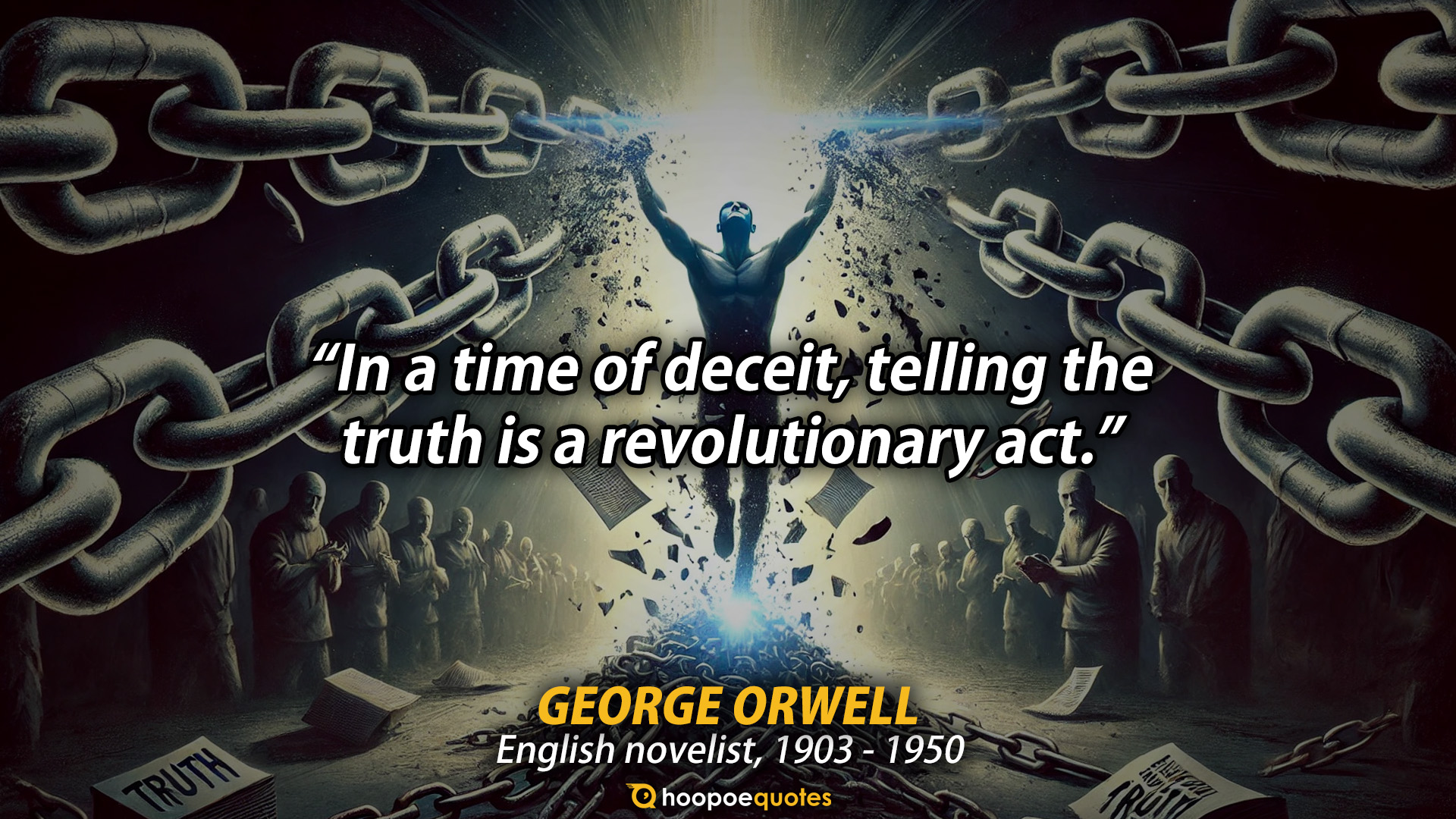
Orwell's idea of truth as a revolutionary act has seeped into popular culture. Movies like The Matrix and V for Vendetta explore themes of truth and rebellion against deceitful systems. In journalism, phrases like “speaking truth to power” echo Orwell’s sentiment, highlighting the ongoing battle against misinformation and corruption.
Modern-Day Application
Fast forward to today, and Orwell’s words are still spot on. In a world where fake news is a daily occurrence and social media algorithms favor sensationalism over facts, telling the truth is more revolutionary than ever. Whistleblowers, investigative journalists, and everyday people calling out lies are the modern revolutionaries.
Think about those who expose corruption, stand up against discriminatory practices, or even challenge harmful social norms. These truth-tellers face backlash, but their courage sparks change. Whether it’s a viral tweet exposing injustice or a documentary unveiling corporate deceit, these acts of truth-telling ripple through society, inspiring others to do the same.
My Take on Orwell’s Quote
To me, Orwell’s quote is both a challenge and an inspiration. It’s a call to arms to live authentically and fearlessly. In my own life, I’ve found that speaking the truth, even when it’s uncomfortable, builds integrity and trust. It’s not always easy, but it’s always worth it.
I challenge you to reflect on your own experiences. When have you faced deceit, and how did you respond? Think about ways you can incorporate honesty into your daily routine. Maybe it’s calling out misinformation when you see it or simply being more truthful in your personal relationships. Small acts of honesty can lead to significant change.
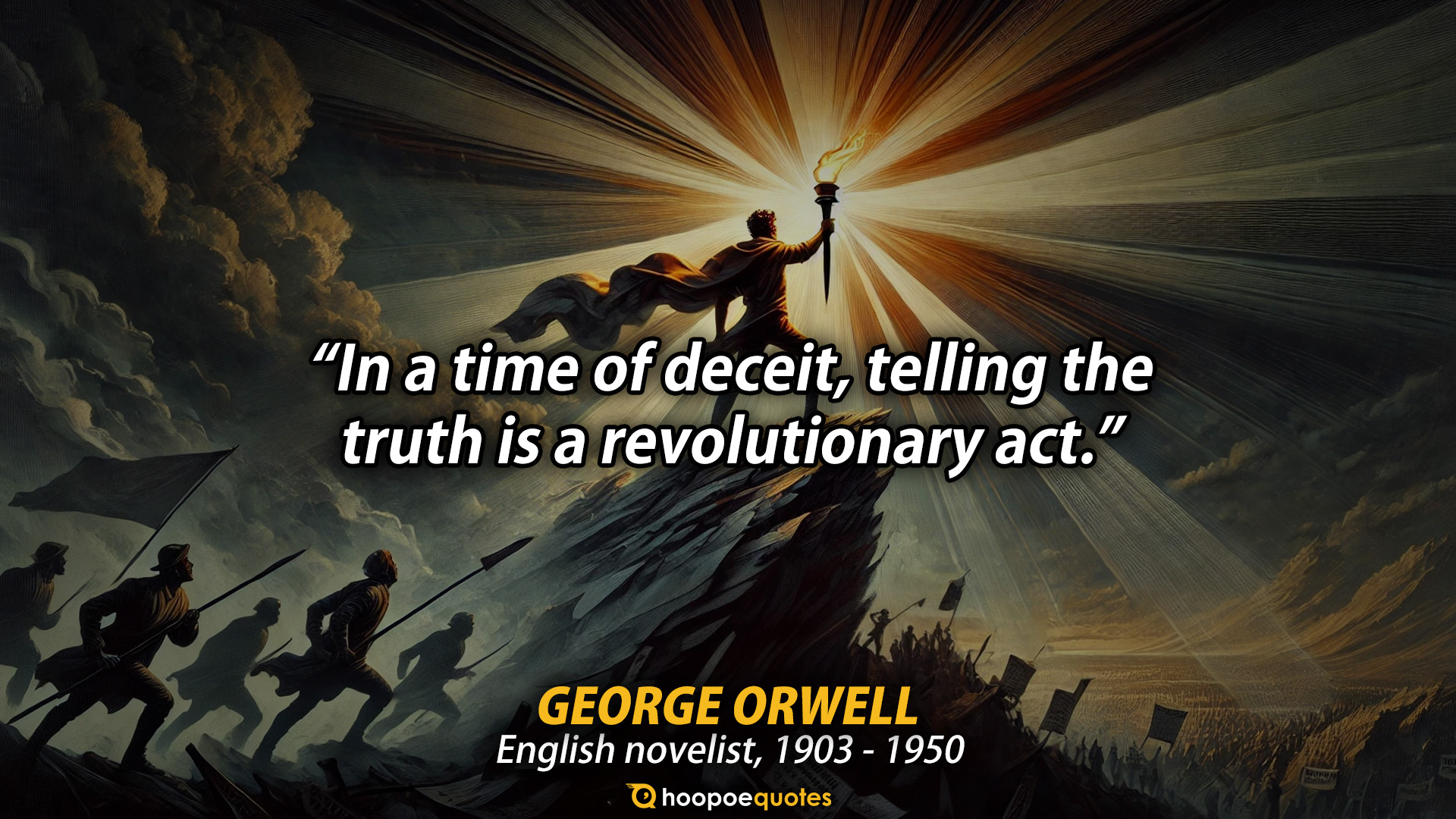
Orwell’s declaration that “telling the truth is a revolutionary act” is a timeless reminder of the power of honesty. It urges us to be brave in a world that often rewards deceit. So, let’s take Orwell’s words to heart. Be the one who dares to speak the truth, even when it feels like the world is built on lies. After all, revolutions start with a single voice.
References and Further Reading
- George Orwell, 1984
- George Orwell, Animal Farm
- Michel Foucault, Discipline and Punish
- Socrates and the Socratic Method
Similar Quotes
- “Truth is powerful and it prevails.” – Sojourner Truth
- “The truth will set you free.” – Biblical Proverb
Thought Exercise
Spend a day actively choosing to be completely honest. Observe how it affects your interactions and perceptions. Reflect on the challenges and rewards of this practice.


![[50+ Images] Birthday Wishes for Someone Special in Your Life Quotes](/media/k2/items/cache/b1dbe5e313fb0e0a26b2b36062a36d3a_M.jpg)
